In-app advertising markets: how fast they are growing, and whether in-app ads lead to sales
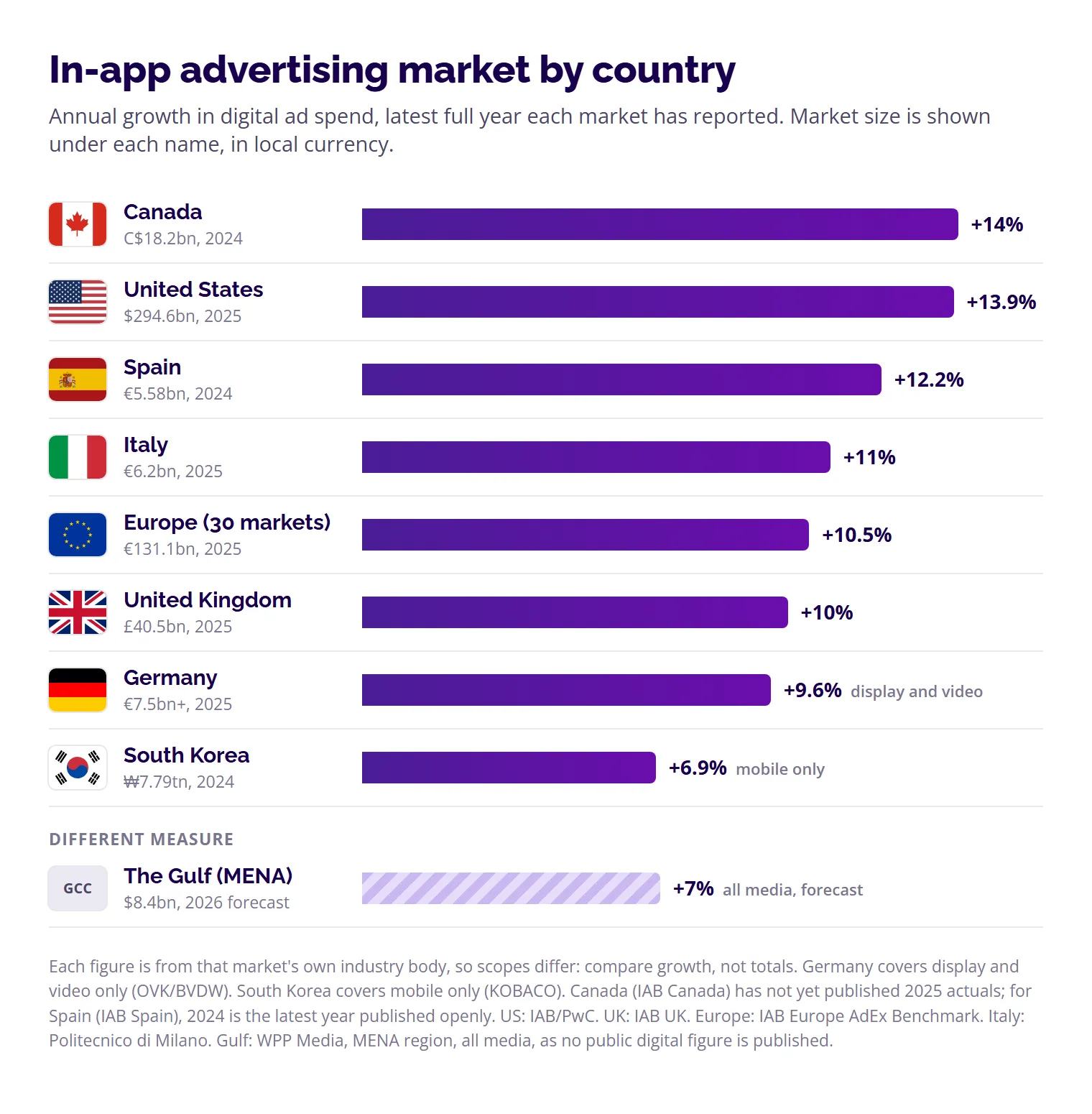
Digital advertising grew 10 to 14% in most major markets in 2025, and most of it now runs inside apps. Recent experiments show ads usually lift sales, but modestly. Here are the figures by country, typical click and conversion rates, what it means for a small business, and how in-app advertising works on Agilis.
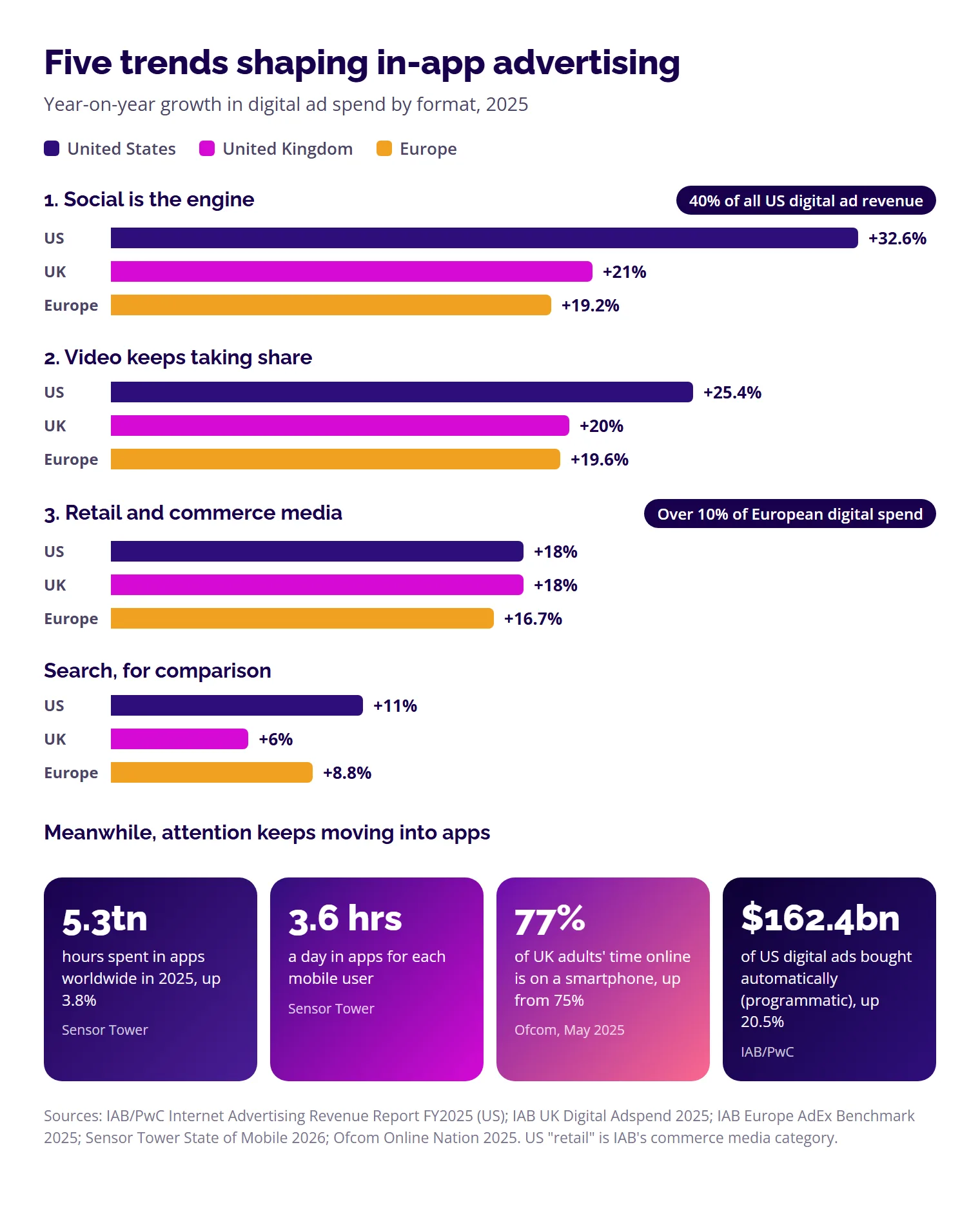
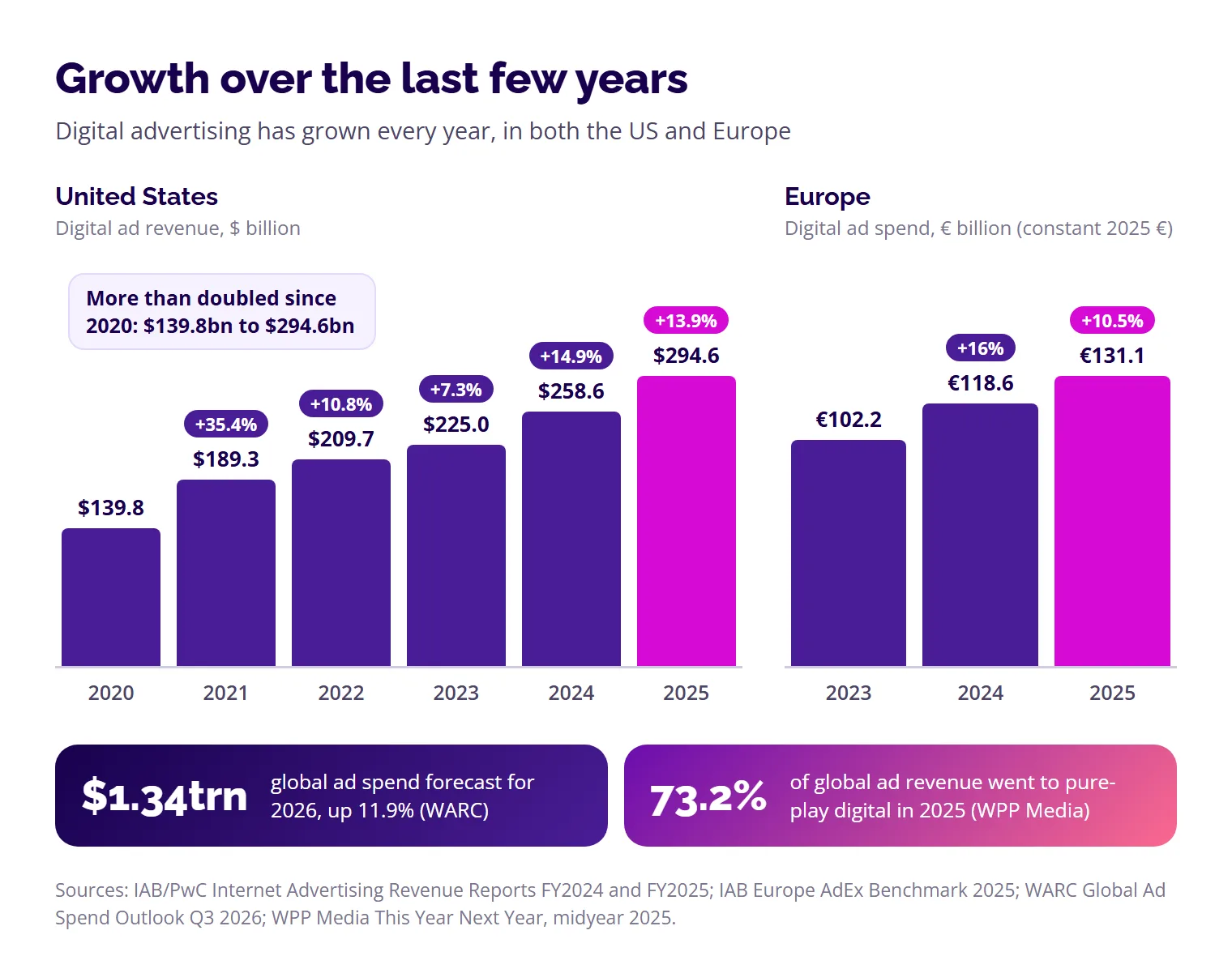
In-app advertising markets are growing everywhere that publishes reliable figures. In 2025 US digital ad revenue rose 13.9% to $294.6 billion, the UK rose 10% to £40.5 billion and Europe rose 10.5% to €131.1 billion. The money follows attention: Sensor Tower counted 5.3 trillion hours spent in apps in 2025, about 3.6 hours a day per mobile user.
Does it lead to sales? Usually yes, but by single digits rather than multiples. Recent large experiments on Facebook and Instagram found ads lifted purchases in most campaigns, with smaller and less experienced advertisers getting the least back. Below are the figures by country, the latest research, typical click and conversion rates, and our own app, Agilis, as a worked example.
Yes, in most campaigns, but the typical lift is modest. Recent studies measure this with randomised experiments, where some people are held back from seeing an ad so the extra sales can be counted:
Gordon, Moakler and Zettelmeyer (Marketing Science, 2023) studied 563 experiments on Facebook, Instagram and Meta's in-app network. The median lift in purchases and sign-ups was about 5%, and about 6 in 10 of those campaigns showed a measurable effect.
Tadelis and colleagues (NBER, 2023) analysed about 700,000 sales campaigns from around 200,000 advertisers. On average, advertisers earned $3.31 in revenue for every $1 spent.
Wernerfelt and colleagues (Marketing Science, 2025) ran experiments with more than 70,000 advertisers and found a median cost of $38.16 for each extra customer an ad produced.
Molitor and colleagues (Information Systems Research, 2025) found that coupons pushed to shoppers through a grocery chain's app, near rival stores, raised redemptions by 6.0%.
Two cautions. The three Meta studies were co-written by Meta researchers, although each used randomised holdouts and went through independent review or the NBER. And $3.31 is revenue, not profit: after your costs, the margin is much thinner.
What click-through and conversion rates look like #
No major platform publishes its own average click-through rate. The most useful recent figures come from LocaliQ's 2026 Facebook benchmarks, drawn from its customers' campaigns across 20 industries. Lead campaigns, which ask people to sign up or enquire, averaged a 2.70% click-through rate:
Industry
Click-through rate (traffic)
Conversion rate (leads)
Cost per lead
Restaurants and food
2.68%
Not reported
Not reported
Arts and entertainment
2.71%
15.31%
$14.59
Beauty and personal care
2.73%
5.63%
$50.91
Health and fitness
1.86%
7.98%
$27.11
All industries
1.93%
8.54%
$27.39
Platforms built around local spending also publish results from their own advertisers. Treat these as company figures, not independent research:
Uber Eats reports sponsored listings deliver up to a 20% increase in sales and orders, from an ongoing holdout experiment (November 2025).
Deliveroo reports adverts raised order volumes by 20 to 40% on average (October to December 2023).
Eventbrite reports events promoted with its ads sold 4 times more tickets on average (its own 2024 data).
I have a small business. Will in-app advertising work for me? #
It can, if what you offer is local and you give people a reason to come now. In a Yelp field experiment published in Marketing Science in 2023, 7,209 randomly chosen US restaurants received free advertising for three months. They saw 7 to 19% more page views, direction requests and calls. The gains stopped when the ads stopped, and were largest for independents with good ratings.
Experience matters too. In the Tadelis study, advertisers with below-median past spend earned about $1.50 in revenue per $1, against more than $3 for bigger spenders. Those who improved over time had set up purchase tracking and kept refining their campaigns. The practical lesson is to start small and learn:
Pick one offer or event with a clear reason to come, and an end date.
Aim it at people within easy reach of you, not the whole country.
Track it with something you control: a code, a booking link or a named offer staff can log.
Run it for a fixed period and compare it with a similar period without it.
Spend only what you would be comfortable treating as the cost of the test.
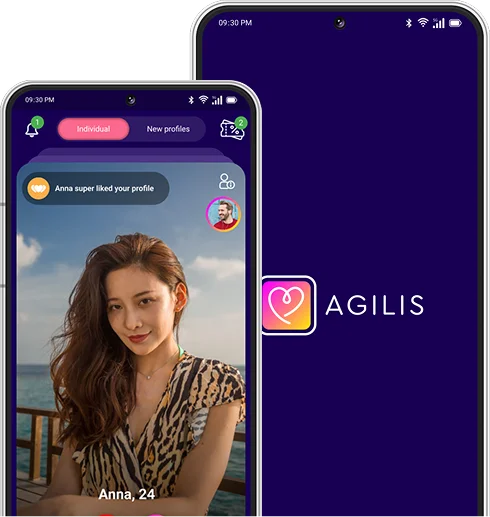
Agilis is a 100% free dating app with no subscriptions, so advertising from local businesses funds it. We built two self-serve formats, Offers and Events, run from the Ad Portal or our REST API. Both follow the conditions above: they reach members near you, carry a clear reason to act, and report what they produce.
Your class, gig, night or workshop in the app's Events tab, shown to members near your venue and sorted by distance.
An invite button on every listing, so a member can ask a match to come along.
Members book on your own booking page, so Agilis takes no commission on tickets.
One flat price per event, whatever its size and however far ahead you list it.
Suits dance and cookery classes, pottery, comedy, gigs, quiz nights, walking tours and wine tastings.
Neither replaces a large platform if you need millions of impressions next week. But if you want to reach active members in the areas you choose, from one neighbourhood to a whole country, at a price you know upfront and without a sales call or minimum spend, they are worth a try.
Can I buy in-app advertising on Agilis myself, without a sales call or a minimum spend?
Yes. Register at agilis.dating/business. Once approved, usually within 5 working days, you create offers and events yourself in the Ad Portal or through our REST API. There is no minimum spend, no contract and no charge to register.
Do I know the full price before I commit?
Yes. An offer's price is based on how long it runs and how many members in your area used Agilis in the last 30 days, and you see it before you pay. An event costs one flat price per listing. There are no hidden fees and no subscription.
How precisely can I target by location?
For an offer, you set a central location and a radius, from a single high street to a whole city, and see the estimated audience before you pay. An event is shown automatically to members near your venue, sorted by distance.
How does Agilis define an active user?
A member who has used Agilis in the last 30 days. Audience estimates and offer prices count only those members, so you do not pay for dormant accounts. An estimate describes who is there; it is not a promise that every one of them will see your offer.
Can I pause, edit or cancel once it is live?
Yes. Offers can be paused, resumed, edited or deleted at any time. Events can be edited, rescheduled or cancelled free of charge, but listings are non-refundable once published, including if you cancel.
What reporting do I get?
For offers: views, clicks, spend and redemptions, by age and gender, exportable as CSV or PDF. For events: members who opened your booking page (each counted once), how many are going, and how many invited someone and had the invite accepted. Going and invites are shown in bands, and you never see names or profiles.
Does Agilis take a cut of my sales?
No. Events link members to your own booking page, so every ticket sale is yours, and offers are paid upfront at the price you saw. That price is the only charge.
Is the Agilis audience relevant to what I sell?
It depends on the format, but most businesses can find a fit. Offers suit almost any product or service, from a local café or salon to a retailer or national brand, because you choose the area they reach. Events suit things two people can do together, such as classes, gigs, tastings and nights out.
Jehan Rajendra
Founder, Agilis
Building a 100% free dating app because meaningful connections shouldn't sit behind a paywall. Writes about safety, privacy and the product decisions behind Agilis.
Profile