Coming back to dating after a long marriage, a divorce or a bereavement? Start with what you want, take it at your own pace, and learn the few warning signs that really matter.
Plenty of people come back to dating in their fifties, sixties or seventies: after a long marriage, after a divorce, or after the death of a partner. Many find that the rules seem to have been rewritten while they were busy living. The apps look as though they were designed for someone half their age, and most of the news stories are about scams.
Most of it is simpler than it looks. These are the tips that matter most, roughly in the order you will need them.
It sounds obvious, but it is the step most people skip. Some people want a partner to share the rest of their life with. Others want company for walks, concerts and Sunday lunches, and are in no hurry for anything more. Some are not sure yet, which is also a perfectly good answer.
Whatever it is, say so in your profile. People who want the same thing will find you more easily, and you will spend less time in conversations that were never going anywhere.
You do not need a smartphone to date online. Many services work in the web browser on a computer or tablet, which can be easier on the eyes and kinder to anyone who types with two fingers. Pick whichever screen you are most comfortable with.
Check what you will actually be able to do before you spend an evening on a profile. Many services are free to join but charge to send messages or to see who likes you. Our guide to whether any dating apps are completely free explains how to tell the difference.
Use recent photos, taken in the last year or two. Someone who meets you should recognise you straight away.
Include at least one clear photo of your face without sunglasses or a hat, and one that shows you doing something you enjoy.
Leave out group photos where it is hard to tell which person you are.
Write about specific things: the grandchildren you see on Sundays, the bowls club, the garden you are slowly losing to the possums. Specific details give people something to reply to.
If writing about yourself feels awkward, our piece on using AI to help write a dating profile may help. Just make sure the finished version still sounds like you.
At this stage of life almost everyone has a history: a former spouse, a partner who died, grown-up children, perhaps grandchildren. None of it needs to be hidden, and none of it needs to be told in full on a first date either. A sentence is usually enough to begin with. The rest can come out naturally as you get to know each other.
It is also fine to take a break if dating stirs up more than you expected, particularly after a bereavement. There is no deadline.
This is the part worth reading twice. Reports to Scamwatch show Australians lost $23.6 million to romance scams in 2024. Between January 2024 and May 2025, people aged 65 and over reported the highest total losses of any age group, at $11.7 million, according to the National Anti-Scam Centre. Scammers look for people who are widowed, divorced or newly looking for a relationship, and they can spend months building trust before asking for anything.
The warning signs listed by Scamwatch are worth knowing by heart:
The relationship moves very fast, with lots of messages or calls and early declarations of strong feelings.
They want to move the conversation off the dating service and onto WhatsApp, Telegram or another messaging app.
There is always a reason they cannot meet, often that they are working overseas, on an oil rig or in the military.
They ask you to keep the relationship secret from family and friends.
Sooner or later there is an emergency, an investment opportunity or a request to move money for them.
A video call helps, but on its own it no longer proves someone is who they say they are: the National Anti-Scam Centre warns that scammers may use AI to appear as someone else on a video call. The simplest rule is the most reliable one. Never send money, bank details or identity documents to someone you have not met in person, however long you have been talking.
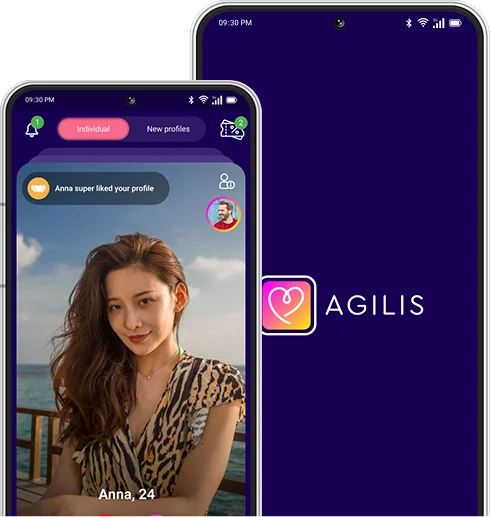
We built Agilis so that dating does not depend on owning the latest phone. It works in the web browser on a computer or tablet as well as on iPhone and Android, and everything is free, with no subscriptions or premium tier. Members take a short camera check to confirm their photos are really them before they can send likes, which is designed to make fake profiles harder to create. Voice and video calls work inside Agilis without either person sharing a phone number, and conversations are checked for common scam warning signs, such as requests for money. If you are in Australia, you can start on our page for singles over 50.
Frequently asked questions
Is it too late to start dating at 60 or 70?
No. People start new relationships at every age, and many come back to dating after a long marriage, a divorce or a bereavement. The practical difference is that you probably know more clearly what you want, which makes it easier to say so in your profile and to recognise the right person when you meet them.
Is online dating safe for seniors?
It can be, if you take a few precautions. Take your time, keep conversations on the dating service until you have met, never send money to someone you have not met in person, and meet somewhere public the first time. Romance scammers do target older people, so learn the warning signs Scamwatch lists: fast declarations of strong feelings, requests to move to another messaging app, excuses for never meeting, and any request for money.
How can I tell if a dating profile is fake?
Look for photos that seem too professional or are blurry, very little personal detail, and a story that does not add up. Scamwatch also suggests searching the person's name with the word scam, and doing a reverse image search on their photos. A service that verifies photos helps, but stay alert to the warning signs either way.
Are there free dating sites for over 50s in Australia?
Many services are free to join but charge for messaging or other features, so check what is free before you build a profile. Agilis is 100% free, with no subscriptions, premium tier or in-app purchases, and works in a web browser as well as on iPhone and Android.
Jehan Rajendra
Founder, Agilis
Building a 100% free dating app because meaningful connections shouldn't sit behind a paywall. Writes about safety, privacy and the product decisions behind Agilis.
Profile