Why Do Dating Apps Charge You to See Who Likes You?
"See who likes you" is one of the most recognisable paid features in online dating. The reason is economics, not conspiracy, and the public filings spell it out.
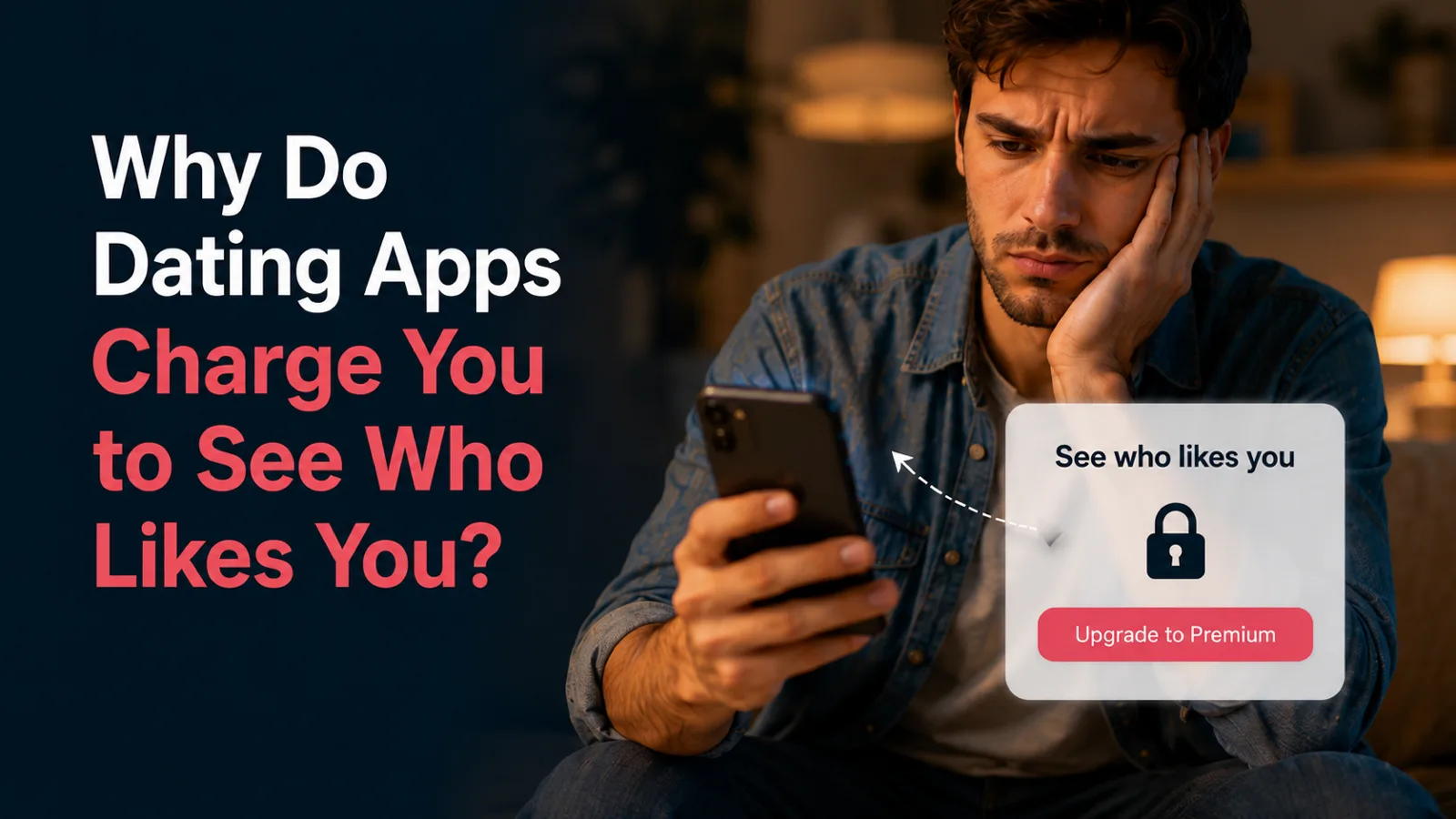
You've opened a dating app and seen that several people apparently like you.
Then you tap to find out who they are.
Upgrade required.
"See who likes you" has become one of the most recognisable premium features in online dating. There is a fairly straightforward reason for it: it is useful, emotionally salient information, and freemium dating businesses need features that some free users value enough to pay for.
You don't need a conspiracy theory to understand the economics.
Dating apps commonly operate on a freemium model #
Match Group, whose portfolio includes Tinder and Hinge, tells investors that its services combine free and paid functionality and that its revenue is primarily earned directly from users through recurring subscriptions and à-la-carte purchases. Match Group reported about $3.5 billion in direct revenue in 2025. Advertising represented a much smaller part of its revenue model.
Bumble describes its model just as explicitly. Its 2025 annual report says the apps operate using a freemium model in which services are free and a subset of members pay for subscriptions or in-app purchases for premium features. Bumble reported approximately $965.7 million in total 2025 revenue, and its filing says advertising and partnership revenue are not a significant part of the business.
These are public-company filings, not speculation about how the products make money.
Why "who likes you?" makes sense as a premium feature #
The information solves a particular problem: uncertainty.
Without it, you work through profiles deciding who you like and eventually discover mutual matches. If you can see everyone who already likes you, you can start with people where some interest already exists.
That makes the feature useful without making it essential for basic matching, which is exactly the kind of feature that fits a freemium model.
And the major apps are consistent about it, in their own documentation:
Tinder lists "See who Likes You — See who Likes You before you decide whether to Like or Nope" among the benefits of Tinder Gold; Platinum includes everything in Gold.
Bumble says signing up for Premium means you can "see who's liked you first with Liked You", and Premium+ includes the same.
Hinge's feature table marks "View All Incoming Likes at Once" against Hinge+ and HingeX only, noting that "free users of Hinge can only see one incoming like at a time".
OkCupid says that seeing who Likes you "without having to like them first" is reserved for users with subscriptions.
Four different companies, four different products, and the same line drawn in the same place.
Pew Research Center found that 35% of Americans who had used online dating had at some point paid for a dating site, app or extra feature. Pew specifically mentioned the ability to see who likes you among the kinds of features users encounter.
That survey was conducted in the United States, so the percentage shouldn't be casually applied to Canada, Britain or anywhere else. But it helps explain why dating companies continue to develop subscription products: a meaningful proportion of users have demonstrated a willingness to pay.
A company has to fund the service somehow, and a clearly explained subscription can be a perfectly legitimate model. A free user who can match and message without paying may reasonably decide that seeing Likes faster isn't worth the upgrade.
It is also worth saying plainly that these apps are not hiding any of this. Every quotation above comes from a public help page or marketing page written by the company itself.
The more interesting question is what each company chooses to classify as premium.
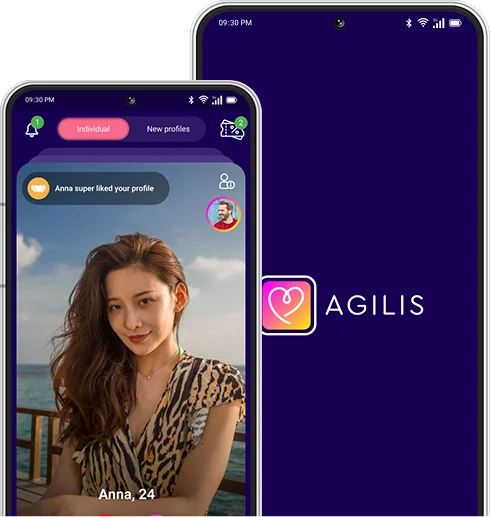
At Agilis, we decided that knowing someone has expressed interest in you is part of the basic dating experience rather than an upgrade. So seeing Likes isn't attached to a subscription, because Agilis doesn't have one.
That's a product choice and a business-model choice, not proof that every other approach is inherently wrong.
Different business models create different product decisions #
This is the part of the discussion I find more interesting than whether £X or $Y is "too expensive".
A subscription-funded dating company needs a set of benefits compelling enough to convert some free users into paying customers. Seeing who likes you is close to ideal for that job: it is valuable, it is emotionally charged, and withholding it doesn't stop the app working.
A dating app funded another way has different constraints.
Agilis is currently building its revenue around advertising and commercial partnerships rather than charging daters for a premium product, which we set out in why we made Agilis completely free. We therefore don't need "see who likes you" to function as a subscription conversion feature.
That doesn't eliminate every incentive or trade-off involved in running a dating platform. No business model does.
But it means this particular feature can remain what we think it should be: information available to the person whose profile was liked. If you're comparing which features sit behind a paywall elsewhere, our guide to free dating apps in Canada without payment breaks it down app by app.
Jehan Rajendra
Founder, Agilis
Building a 100% free dating app because meaningful connections shouldn't sit behind a paywall. Writes about safety, privacy and the product decisions behind Agilis.
Profile